01
230gsm matte paper
Smooth, acid-free, dense blacks. Rolled when you order a print.
Materials & Making
Paper. Ink. Wood. Canvas. Before it hangs on your wall, a Mustardology piece is a physical object you could drop on your foot. Every part of it has a name. This is what you are actually buying. Not a poster from the mall. Not a canvas print from a gas station. A real thing, made when you order it.
01
Smooth, acid-free, dense blacks. Rolled when you order a print.
02
Stretched on 1.5" gallery bars. Ready to hang.
03
Black frame with a narrow reveal so the canvas appears to float.
04
Printed, checked, and finished when you order. Never from a warehouse pile.
230gsm. Smooth. Matte. Acid-free. Heavy enough that you notice when you pick it up. Bright white for contrast. Matte so the typography does the talking, not the glare off the surface.
Instant-dry coating. Fingerprints bounce off. Dense blacks stay dense. Clean edges at typographic scale, which matters when your whole piece is letters. Same stock whether you buy it open or framed.
Giclée, aqueous pigment inks
Pigment, not dye. The ink sits in the coating as microscopic droplets of color. That is what keeps edges sharp when the whole piece is typography.
Giclée, eco-solvent inkjet
Different material, different process. Eco-solvent ink bonds with the canvas coating so the surface can be stretched without cracking. Physics, not marketing.
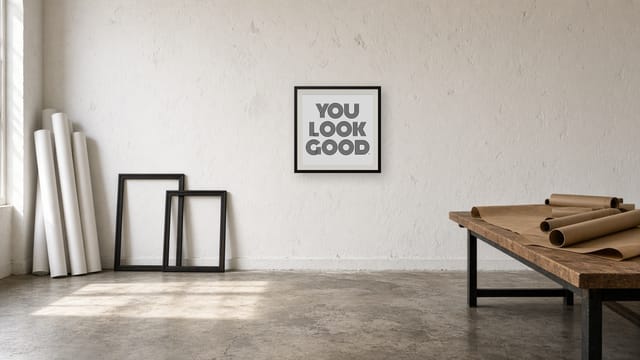
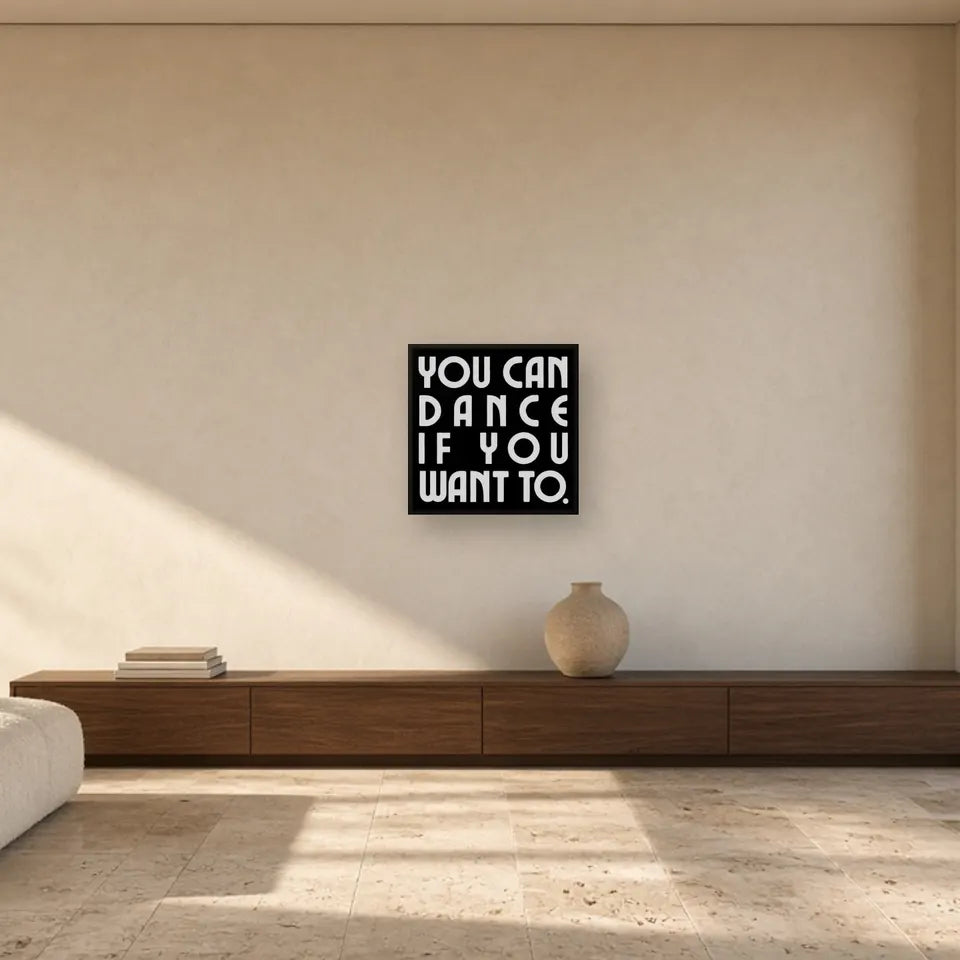
The printers are color-calibrated on a schedule. The yellow you get is the yellow we chose. One honest caveat: your phone screen and a printed page are different physics. When in doubt, trust the print. The screen lied to you. It always does.
Five parts, in order. Solid wood. A real mat. Optical-grade acrylic. Assembled and wired before it ships. You hang it. You do not spend a Saturday at the framing shop.
Hover, tap, or tab through the layers.
360gsm polycotton, stretched over 1.5″ solid wood bars. A gallery-depth object that hangs on its own. No frame required. It has weight. It has presence. It is not a poster taped to the wall.
The edges are a solid border, so the full artwork stays on the face. Nothing folds around the corner; no letter gets lost on a side.
A floating frame does not touch the artwork face. The canvas sits inside it with a narrow reveal on all sides. A line of shadow between the work and the frame. Makes it read as an object, not something you bought at a college poster sale.
Every piece is made to order. No warehouse pile. No atelier theater. No guy in a beret pretending he mixed the ink by hand. Just a clean chain from file to wall, handled by people who do this for a living.
Shown proportionally. All works are square.
230gsm smooth matte fine-art paper. Acid-free. Bright white. Instant-dry coating that resists fingerprints. Heavy enough that you notice when you pick it up.
Paper prints are giclée-printed with aqueous pigment inks. Canvas gets eco-solvent inks. Both run on professional equipment that gets color-calibrated on a schedule. Not a desktop printer. Not a warehouse pile.
Solid wood. Framed prints use a black frame with a 1.25" face, a 2" white 4-ply mat, and optical-grade clear acrylic. Framed canvas uses a black solid-wood floating frame. You hang it. You do not spend Saturday at the framing shop.
Yes. Wire installed. Nail in wall. Done. We are not going to make you figure out D-rings.
A print is 230gsm matte fine-art paper. Flat. Precise. Made for framing. A canvas is 360gsm polycotton stretched over 1.5" solid wood bars. A physical object that hangs on its own. The full artwork stays on the face. Nothing wraps around the sides.
Dust with a soft, dry cloth. Keep it out of direct sunlight. Canvas can take a gentle wipe with a barely damp cloth. Never soak it. Avoid humid rooms. Full guide at Materials & Making.
Four square sizes, from 10×10" to 36×36". Need something outside that? Talk to us about trade work. We have done stranger things.
